
This publication was developed as a primer for youth on the green economy, particularly since there are no youth-friendly publications that explain this issue to youth. This publication enables youth to better familiarize themselves with the green economy and the skills needed for it, such as engaging in social innovation and green entrepreneurship.
E-Library
This guidebook, Integrating Education for Sustainable Development (ESD) in Teacher Education in South-East Asia, takes readers through a step-by-step action research approach to integrate ESD in teacher education programmes and practices. It is hoped that this guidebook will be a relevant resource for deans of education, curriculum developers and other teacher trainers/educators who can adapt it for use in local contexts.
This recently released UNESCO publication presents an overview of ESD and highlights key issues, trends, and challenges related to ESD policy and practice. Topics include key ESD competencies and themes, policy, changes in the learning environment, teacher training, youth as lead actors, scaling-up action, and the monitoring of progress towards SDG Target 4.7.
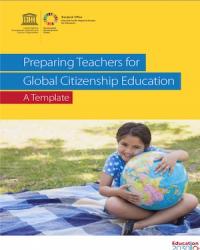
Preparing Teachers for Global Citizenship Education: A Template is a response to a demand from teacher educators and teachers for practical information and tips on how they can embed Global Citizenship Education (GCED) into their teaching practices.
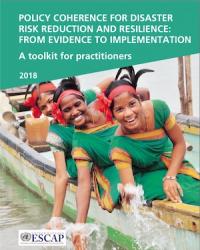
Disaster risk reduction and resilience is crucial to achieving the 2030 Agenda for Sustainable Development. Embedded across the SDGs, disaster risk reduction is an enabler of more than a dozen goals spanning food security, human health, infrastructure, and ecosystem-related targets. Enhancing policy coherence among the SDGs and across the 2030 Development Agendas requires an approach that can be adapted to the specific circumstances, context and needs of countries.
Sustainable Development Data Digest: Laying the Foundation to Measure Sustainable Development Goal 4
Offers a roadmap for the production of the new indicators needed to monitor progress towards Education Development Objective 4 (SDG4) Education - 2030.
The collection and analysis of good quality data to track progress in education across the world are vital to ensure that no one is left behind. According to a 2016 inventory undertaken by the UNESCO Institute for Statistics (UIS), the world currently gathers only half of the data needed to monitor progress towards the Sustainable Development Goal 4 (SDG 4) targets.
Presents a framework and strategy to improve national data quality needed to monitor SDG 4.
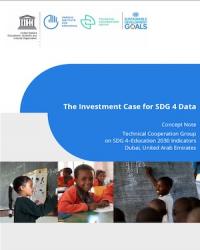
Imagine the scenario in which a newly appointed education minister arrives at the ministry, with a modern approach and steadfast commitment to the spirit and reporting of the Sustainable Development Goal on education (SDG 4).
The new Handbook on Measuring Equity in Education, produced by the UNESCO Institute for Statistics (UIS), the FHI 360 Education Policy Data Centre, Oxford Policy Management and the Research for Equitable Access and Learning (REAL) Centre at the University of Cambridge, provides practical guidance on the calculation and interpretation of indicators designed to target the most disadvantaged groups.
This guidebook, Integrating Education for Sustainable Development (ESD) in Teacher Education in South-East Asia, takes readers through a step-by-step action research approach to integrate ESD in teacher education programmes and practices. It is hoped that this guidebook will be a relevant resource for deans of education, curriculum developers and other teacher trainers/educators who can adapt it for use in local contexts.
This recently released UNESCO publication presents an overview of ESD and highlights key issues, trends, and challenges related to ESD policy and practice. Topics include key ESD competencies and themes, policy, changes in the learning environment, teacher training, youth as lead actors, scaling-up action, and the monitoring of progress towards SDG Target 4.7.
Preparing Teachers for Global Citizenship Education: A Template is a response to a demand from teacher educators and teachers for practical information and tips on how they can embed Global Citizenship Education (GCED) into their teaching practices.
Disaster risk reduction and resilience is crucial to achieving the 2030 Agenda for Sustainable Development. Embedded across the SDGs, disaster risk reduction is an enabler of more than a dozen goals spanning food security, human health, infrastructure, and ecosystem-related targets. Enhancing policy coherence among the SDGs and across the 2030 Development Agendas requires an approach that can be adapted to the specific circumstances, context and needs of countries.
Sustainable Development Data Digest: Laying the Foundation to Measure Sustainable Development Goal 4
Offers a roadmap for the production of the new indicators needed to monitor progress towards Education Development Objective 4 (SDG4) Education - 2030.
The collection and analysis of good quality data to track progress in education across the world are vital to ensure that no one is left behind. According to a 2016 inventory undertaken by the UNESCO Institute for Statistics (UIS), the world currently gathers only half of the data needed to monitor progress towards the Sustainable Development Goal 4 (SDG 4) targets.
Presents a framework and strategy to improve national data quality needed to monitor SDG 4.
Imagine the scenario in which a newly appointed education minister arrives at the ministry, with a modern approach and steadfast commitment to the spirit and reporting of the Sustainable Development Goal on education (SDG 4).
The new Handbook on Measuring Equity in Education, produced by the UNESCO Institute for Statistics (UIS), the FHI 360 Education Policy Data Centre, Oxford Policy Management and the Research for Equitable Access and Learning (REAL) Centre at the University of Cambridge, provides practical guidance on the calculation and interpretation of indicators designed to target the most disadvantaged groups.

This guidebook, Integrating Education for Sustainable Development (ESD) in Teacher Education in South-East Asia, takes readers through a step-by-step action research approach to integrate ESD in teacher education programmes and practices. It is hoped that this guidebook will be a relevant resource for deans of education, curriculum developers and other teacher trainers/educators who can adapt it for use in local contexts.
This recently released UNESCO publication presents an overview of ESD and highlights key issues, trends, and challenges related to ESD policy and practice. Topics include key ESD competencies and themes, policy, changes in the learning environment, teacher training, youth as lead actors, scaling-up action, and the monitoring of progress towards SDG Target 4.7.
Preparing Teachers for Global Citizenship Education: A Template is a response to a demand from teacher educators and teachers for practical information and tips on how they can embed Global Citizenship Education (GCED) into their teaching practices.
Disaster risk reduction and resilience is crucial to achieving the 2030 Agenda for Sustainable Development. Embedded across the SDGs, disaster risk reduction is an enabler of more than a dozen goals spanning food security, human health, infrastructure, and ecosystem-related targets. Enhancing policy coherence among the SDGs and across the 2030 Development Agendas requires an approach that can be adapted to the specific circumstances, context and needs of countries.
Sustainable Development Data Digest: Laying the Foundation to Measure Sustainable Development Goal 4
Offers a roadmap for the production of the new indicators needed to monitor progress towards Education Development Objective 4 (SDG4) Education - 2030.
The collection and analysis of good quality data to track progress in education across the world are vital to ensure that no one is left behind. According to a 2016 inventory undertaken by the UNESCO Institute for Statistics (UIS), the world currently gathers only half of the data needed to monitor progress towards the Sustainable Development Goal 4 (SDG 4) targets.
Presents a framework and strategy to improve national data quality needed to monitor SDG 4.
Imagine the scenario in which a newly appointed education minister arrives at the ministry, with a modern approach and steadfast commitment to the spirit and reporting of the Sustainable Development Goal on education (SDG 4).
The new Handbook on Measuring Equity in Education, produced by the UNESCO Institute for Statistics (UIS), the FHI 360 Education Policy Data Centre, Oxford Policy Management and the Research for Equitable Access and Learning (REAL) Centre at the University of Cambridge, provides practical guidance on the calculation and interpretation of indicators designed to target the most disadvantaged groups.

This recently released UNESCO publication presents an overview of ESD and highlights key issues, trends, and challenges related to ESD policy and practice. Topics include key ESD competencies and themes, policy, changes in the learning environment, teacher training, youth as lead actors, scaling-up action, and the monitoring of progress towards SDG Target 4.7.
Preparing Teachers for Global Citizenship Education: A Template is a response to a demand from teacher educators and teachers for practical information and tips on how they can embed Global Citizenship Education (GCED) into their teaching practices.
Disaster risk reduction and resilience is crucial to achieving the 2030 Agenda for Sustainable Development. Embedded across the SDGs, disaster risk reduction is an enabler of more than a dozen goals spanning food security, human health, infrastructure, and ecosystem-related targets. Enhancing policy coherence among the SDGs and across the 2030 Development Agendas requires an approach that can be adapted to the specific circumstances, context and needs of countries.
Sustainable Development Data Digest: Laying the Foundation to Measure Sustainable Development Goal 4
Offers a roadmap for the production of the new indicators needed to monitor progress towards Education Development Objective 4 (SDG4) Education - 2030.
The collection and analysis of good quality data to track progress in education across the world are vital to ensure that no one is left behind. According to a 2016 inventory undertaken by the UNESCO Institute for Statistics (UIS), the world currently gathers only half of the data needed to monitor progress towards the Sustainable Development Goal 4 (SDG 4) targets.
Presents a framework and strategy to improve national data quality needed to monitor SDG 4.
Imagine the scenario in which a newly appointed education minister arrives at the ministry, with a modern approach and steadfast commitment to the spirit and reporting of the Sustainable Development Goal on education (SDG 4).
The new Handbook on Measuring Equity in Education, produced by the UNESCO Institute for Statistics (UIS), the FHI 360 Education Policy Data Centre, Oxford Policy Management and the Research for Equitable Access and Learning (REAL) Centre at the University of Cambridge, provides practical guidance on the calculation and interpretation of indicators designed to target the most disadvantaged groups.

Preparing Teachers for Global Citizenship Education: A Template is a response to a demand from teacher educators and teachers for practical information and tips on how they can embed Global Citizenship Education (GCED) into their teaching practices.
Disaster risk reduction and resilience is crucial to achieving the 2030 Agenda for Sustainable Development. Embedded across the SDGs, disaster risk reduction is an enabler of more than a dozen goals spanning food security, human health, infrastructure, and ecosystem-related targets. Enhancing policy coherence among the SDGs and across the 2030 Development Agendas requires an approach that can be adapted to the specific circumstances, context and needs of countries.
Sustainable Development Data Digest: Laying the Foundation to Measure Sustainable Development Goal 4
Offers a roadmap for the production of the new indicators needed to monitor progress towards Education Development Objective 4 (SDG4) Education - 2030.
The collection and analysis of good quality data to track progress in education across the world are vital to ensure that no one is left behind. According to a 2016 inventory undertaken by the UNESCO Institute for Statistics (UIS), the world currently gathers only half of the data needed to monitor progress towards the Sustainable Development Goal 4 (SDG 4) targets.
Presents a framework and strategy to improve national data quality needed to monitor SDG 4.
Imagine the scenario in which a newly appointed education minister arrives at the ministry, with a modern approach and steadfast commitment to the spirit and reporting of the Sustainable Development Goal on education (SDG 4).
The new Handbook on Measuring Equity in Education, produced by the UNESCO Institute for Statistics (UIS), the FHI 360 Education Policy Data Centre, Oxford Policy Management and the Research for Equitable Access and Learning (REAL) Centre at the University of Cambridge, provides practical guidance on the calculation and interpretation of indicators designed to target the most disadvantaged groups.

Disaster risk reduction and resilience is crucial to achieving the 2030 Agenda for Sustainable Development. Embedded across the SDGs, disaster risk reduction is an enabler of more than a dozen goals spanning food security, human health, infrastructure, and ecosystem-related targets. Enhancing policy coherence among the SDGs and across the 2030 Development Agendas requires an approach that can be adapted to the specific circumstances, context and needs of countries.
Sustainable Development Data Digest: Laying the Foundation to Measure Sustainable Development Goal 4
Offers a roadmap for the production of the new indicators needed to monitor progress towards Education Development Objective 4 (SDG4) Education - 2030.
The collection and analysis of good quality data to track progress in education across the world are vital to ensure that no one is left behind. According to a 2016 inventory undertaken by the UNESCO Institute for Statistics (UIS), the world currently gathers only half of the data needed to monitor progress towards the Sustainable Development Goal 4 (SDG 4) targets.
Presents a framework and strategy to improve national data quality needed to monitor SDG 4.
Imagine the scenario in which a newly appointed education minister arrives at the ministry, with a modern approach and steadfast commitment to the spirit and reporting of the Sustainable Development Goal on education (SDG 4).
The new Handbook on Measuring Equity in Education, produced by the UNESCO Institute for Statistics (UIS), the FHI 360 Education Policy Data Centre, Oxford Policy Management and the Research for Equitable Access and Learning (REAL) Centre at the University of Cambridge, provides practical guidance on the calculation and interpretation of indicators designed to target the most disadvantaged groups.
Sustainable Development Data Digest: Laying the Foundation to Measure Sustainable Development Goal 4
Offers a roadmap for the production of the new indicators needed to monitor progress towards Education Development Objective 4 (SDG4) Education - 2030.
The collection and analysis of good quality data to track progress in education across the world are vital to ensure that no one is left behind. According to a 2016 inventory undertaken by the UNESCO Institute for Statistics (UIS), the world currently gathers only half of the data needed to monitor progress towards the Sustainable Development Goal 4 (SDG 4) targets.
Presents a framework and strategy to improve national data quality needed to monitor SDG 4.
Imagine the scenario in which a newly appointed education minister arrives at the ministry, with a modern approach and steadfast commitment to the spirit and reporting of the Sustainable Development Goal on education (SDG 4).
The new Handbook on Measuring Equity in Education, produced by the UNESCO Institute for Statistics (UIS), the FHI 360 Education Policy Data Centre, Oxford Policy Management and the Research for Equitable Access and Learning (REAL) Centre at the University of Cambridge, provides practical guidance on the calculation and interpretation of indicators designed to target the most disadvantaged groups.

The collection and analysis of good quality data to track progress in education across the world are vital to ensure that no one is left behind. According to a 2016 inventory undertaken by the UNESCO Institute for Statistics (UIS), the world currently gathers only half of the data needed to monitor progress towards the Sustainable Development Goal 4 (SDG 4) targets.
Presents a framework and strategy to improve national data quality needed to monitor SDG 4.
Imagine the scenario in which a newly appointed education minister arrives at the ministry, with a modern approach and steadfast commitment to the spirit and reporting of the Sustainable Development Goal on education (SDG 4).
The new Handbook on Measuring Equity in Education, produced by the UNESCO Institute for Statistics (UIS), the FHI 360 Education Policy Data Centre, Oxford Policy Management and the Research for Equitable Access and Learning (REAL) Centre at the University of Cambridge, provides practical guidance on the calculation and interpretation of indicators designed to target the most disadvantaged groups.
Presents a framework and strategy to improve national data quality needed to monitor SDG 4.
Imagine the scenario in which a newly appointed education minister arrives at the ministry, with a modern approach and steadfast commitment to the spirit and reporting of the Sustainable Development Goal on education (SDG 4).
The new Handbook on Measuring Equity in Education, produced by the UNESCO Institute for Statistics (UIS), the FHI 360 Education Policy Data Centre, Oxford Policy Management and the Research for Equitable Access and Learning (REAL) Centre at the University of Cambridge, provides practical guidance on the calculation and interpretation of indicators designed to target the most disadvantaged groups.
Imagine the scenario in which a newly appointed education minister arrives at the ministry, with a modern approach and steadfast commitment to the spirit and reporting of the Sustainable Development Goal on education (SDG 4).
The new Handbook on Measuring Equity in Education, produced by the UNESCO Institute for Statistics (UIS), the FHI 360 Education Policy Data Centre, Oxford Policy Management and the Research for Equitable Access and Learning (REAL) Centre at the University of Cambridge, provides practical guidance on the calculation and interpretation of indicators designed to target the most disadvantaged groups.

The new Handbook on Measuring Equity in Education, produced by the UNESCO Institute for Statistics (UIS), the FHI 360 Education Policy Data Centre, Oxford Policy Management and the Research for Equitable Access and Learning (REAL) Centre at the University of Cambridge, provides practical guidance on the calculation and interpretation of indicators designed to target the most disadvantaged groups.