
Thailand is one of the countries in Southeast Asia which have explored options for integrating climate change into national planning and budgeting. It was also one of the first group of five countries to produce a Climate Change Public Expenditure and Institutional Review and has played a leading role in piloting analysis of how climate change affects the benefits from public expenditure.
E-Library
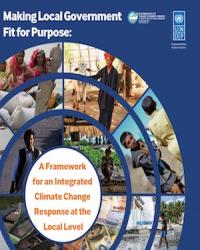
The increasing intensity and frequency of climate related shocks, as well as it’s diverse, localised manifestations means that the costs of addressing climate change are likely to fall disproportionately on local government. Yet, in many countries climate finance is managed at the national level and is not effectively trickling down to the subnational level.
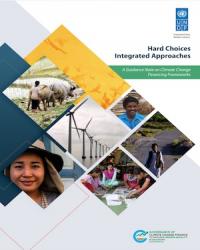
This Guidance Note serves as an introductory guide for stakeholders on how to create or refine a Climate Change Financing Framework (CCFF) – a strategic, whole-of-government plan to better manage, mobilize and target climate finance.
The Social Outlook for Asia and the Pacific lays out new arguments and evidence for the critical and urgent need to increase investment in people, particularly in social protection.
The paper provides a comparative analysis of the Voluntary National Reviews (VNRs) that were submitted to the High-level Political Forum in 2017. The purpose of the analysis is to identify major commonalities and differences in countries’ approaches to implementing and reviewing the 2030 Agenda. A special focus was put on three main themes: institutional mechanisms, participation of non-state actors, and statistics and data.
Based on experiences from members of the Partners for Review network, this paper analyses participation of non-state actors in the review process of the 2030 Agenda and investigates how to make participation meaningful. The study focuses on the review process at the national level and defines ‘review’ as a process in which different stakeholders are engaged in a joint diagnosis of progress towards achieving the 2030 Agenda.
Voluntary National Reviews submitted to the 2018 High-level Political Forum – a Comparative Analysis
The paper provides a comparative analysis of the Voluntary National Reviews (VNRs) that were submitted to the High-level Political Forum in 2018. The purpose of the analysis is to identify major commonalities and differences in countries’ approaches to implementing and reviewing the 2030 Agenda. In order to facilitate the identification of trends and tendencies over time, it compares observations to VNRs submitted in 2017 and 2017.
This magazine presents ten practical examples from ten different countries. Each article portrays one specific approach that the respective country has taken to resolve a particular challenge in the SDG review process. The cases address one or more of the following thematic areas: institutional coordination, stakeholder engagement, and addressing data challenges.
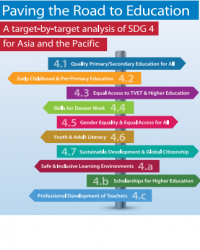
The globally adopted development agenda “Transforming our World: the 2030 Agenda for Sustainable Development” has established ambitious intentions that build on the past Millennium Development Goals but also expand on their achievements.
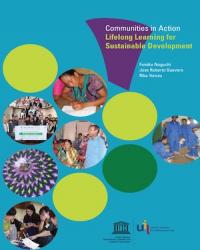
This handbook aims to be a basic informative guide for national and municipal government officers and those who work with community learning centres (CLCs) and other community organizations. Its purpose is to develop stronger partnerships to enhance community-based Education for Sustainable Development (ESD).
The increasing intensity and frequency of climate related shocks, as well as it’s diverse, localised manifestations means that the costs of addressing climate change are likely to fall disproportionately on local government. Yet, in many countries climate finance is managed at the national level and is not effectively trickling down to the subnational level.
This Guidance Note serves as an introductory guide for stakeholders on how to create or refine a Climate Change Financing Framework (CCFF) – a strategic, whole-of-government plan to better manage, mobilize and target climate finance.
The Social Outlook for Asia and the Pacific lays out new arguments and evidence for the critical and urgent need to increase investment in people, particularly in social protection.
The paper provides a comparative analysis of the Voluntary National Reviews (VNRs) that were submitted to the High-level Political Forum in 2017. The purpose of the analysis is to identify major commonalities and differences in countries’ approaches to implementing and reviewing the 2030 Agenda. A special focus was put on three main themes: institutional mechanisms, participation of non-state actors, and statistics and data.
Based on experiences from members of the Partners for Review network, this paper analyses participation of non-state actors in the review process of the 2030 Agenda and investigates how to make participation meaningful. The study focuses on the review process at the national level and defines ‘review’ as a process in which different stakeholders are engaged in a joint diagnosis of progress towards achieving the 2030 Agenda.
Voluntary National Reviews submitted to the 2018 High-level Political Forum – a Comparative Analysis
The paper provides a comparative analysis of the Voluntary National Reviews (VNRs) that were submitted to the High-level Political Forum in 2018. The purpose of the analysis is to identify major commonalities and differences in countries’ approaches to implementing and reviewing the 2030 Agenda. In order to facilitate the identification of trends and tendencies over time, it compares observations to VNRs submitted in 2017 and 2017.
This magazine presents ten practical examples from ten different countries. Each article portrays one specific approach that the respective country has taken to resolve a particular challenge in the SDG review process. The cases address one or more of the following thematic areas: institutional coordination, stakeholder engagement, and addressing data challenges.
The globally adopted development agenda “Transforming our World: the 2030 Agenda for Sustainable Development” has established ambitious intentions that build on the past Millennium Development Goals but also expand on their achievements.
This handbook aims to be a basic informative guide for national and municipal government officers and those who work with community learning centres (CLCs) and other community organizations. Its purpose is to develop stronger partnerships to enhance community-based Education for Sustainable Development (ESD).

The increasing intensity and frequency of climate related shocks, as well as it’s diverse, localised manifestations means that the costs of addressing climate change are likely to fall disproportionately on local government. Yet, in many countries climate finance is managed at the national level and is not effectively trickling down to the subnational level.
This Guidance Note serves as an introductory guide for stakeholders on how to create or refine a Climate Change Financing Framework (CCFF) – a strategic, whole-of-government plan to better manage, mobilize and target climate finance.
The Social Outlook for Asia and the Pacific lays out new arguments and evidence for the critical and urgent need to increase investment in people, particularly in social protection.
The paper provides a comparative analysis of the Voluntary National Reviews (VNRs) that were submitted to the High-level Political Forum in 2017. The purpose of the analysis is to identify major commonalities and differences in countries’ approaches to implementing and reviewing the 2030 Agenda. A special focus was put on three main themes: institutional mechanisms, participation of non-state actors, and statistics and data.
Based on experiences from members of the Partners for Review network, this paper analyses participation of non-state actors in the review process of the 2030 Agenda and investigates how to make participation meaningful. The study focuses on the review process at the national level and defines ‘review’ as a process in which different stakeholders are engaged in a joint diagnosis of progress towards achieving the 2030 Agenda.
Voluntary National Reviews submitted to the 2018 High-level Political Forum – a Comparative Analysis
The paper provides a comparative analysis of the Voluntary National Reviews (VNRs) that were submitted to the High-level Political Forum in 2018. The purpose of the analysis is to identify major commonalities and differences in countries’ approaches to implementing and reviewing the 2030 Agenda. In order to facilitate the identification of trends and tendencies over time, it compares observations to VNRs submitted in 2017 and 2017.
This magazine presents ten practical examples from ten different countries. Each article portrays one specific approach that the respective country has taken to resolve a particular challenge in the SDG review process. The cases address one or more of the following thematic areas: institutional coordination, stakeholder engagement, and addressing data challenges.
The globally adopted development agenda “Transforming our World: the 2030 Agenda for Sustainable Development” has established ambitious intentions that build on the past Millennium Development Goals but also expand on their achievements.
This handbook aims to be a basic informative guide for national and municipal government officers and those who work with community learning centres (CLCs) and other community organizations. Its purpose is to develop stronger partnerships to enhance community-based Education for Sustainable Development (ESD).

This Guidance Note serves as an introductory guide for stakeholders on how to create or refine a Climate Change Financing Framework (CCFF) – a strategic, whole-of-government plan to better manage, mobilize and target climate finance.
The Social Outlook for Asia and the Pacific lays out new arguments and evidence for the critical and urgent need to increase investment in people, particularly in social protection.
The paper provides a comparative analysis of the Voluntary National Reviews (VNRs) that were submitted to the High-level Political Forum in 2017. The purpose of the analysis is to identify major commonalities and differences in countries’ approaches to implementing and reviewing the 2030 Agenda. A special focus was put on three main themes: institutional mechanisms, participation of non-state actors, and statistics and data.
Based on experiences from members of the Partners for Review network, this paper analyses participation of non-state actors in the review process of the 2030 Agenda and investigates how to make participation meaningful. The study focuses on the review process at the national level and defines ‘review’ as a process in which different stakeholders are engaged in a joint diagnosis of progress towards achieving the 2030 Agenda.
Voluntary National Reviews submitted to the 2018 High-level Political Forum – a Comparative Analysis
The paper provides a comparative analysis of the Voluntary National Reviews (VNRs) that were submitted to the High-level Political Forum in 2018. The purpose of the analysis is to identify major commonalities and differences in countries’ approaches to implementing and reviewing the 2030 Agenda. In order to facilitate the identification of trends and tendencies over time, it compares observations to VNRs submitted in 2017 and 2017.
This magazine presents ten practical examples from ten different countries. Each article portrays one specific approach that the respective country has taken to resolve a particular challenge in the SDG review process. The cases address one or more of the following thematic areas: institutional coordination, stakeholder engagement, and addressing data challenges.
The globally adopted development agenda “Transforming our World: the 2030 Agenda for Sustainable Development” has established ambitious intentions that build on the past Millennium Development Goals but also expand on their achievements.
This handbook aims to be a basic informative guide for national and municipal government officers and those who work with community learning centres (CLCs) and other community organizations. Its purpose is to develop stronger partnerships to enhance community-based Education for Sustainable Development (ESD).

The Social Outlook for Asia and the Pacific lays out new arguments and evidence for the critical and urgent need to increase investment in people, particularly in social protection.
The paper provides a comparative analysis of the Voluntary National Reviews (VNRs) that were submitted to the High-level Political Forum in 2017. The purpose of the analysis is to identify major commonalities and differences in countries’ approaches to implementing and reviewing the 2030 Agenda. A special focus was put on three main themes: institutional mechanisms, participation of non-state actors, and statistics and data.
Based on experiences from members of the Partners for Review network, this paper analyses participation of non-state actors in the review process of the 2030 Agenda and investigates how to make participation meaningful. The study focuses on the review process at the national level and defines ‘review’ as a process in which different stakeholders are engaged in a joint diagnosis of progress towards achieving the 2030 Agenda.
Voluntary National Reviews submitted to the 2018 High-level Political Forum – a Comparative Analysis
The paper provides a comparative analysis of the Voluntary National Reviews (VNRs) that were submitted to the High-level Political Forum in 2018. The purpose of the analysis is to identify major commonalities and differences in countries’ approaches to implementing and reviewing the 2030 Agenda. In order to facilitate the identification of trends and tendencies over time, it compares observations to VNRs submitted in 2017 and 2017.
This magazine presents ten practical examples from ten different countries. Each article portrays one specific approach that the respective country has taken to resolve a particular challenge in the SDG review process. The cases address one or more of the following thematic areas: institutional coordination, stakeholder engagement, and addressing data challenges.
The globally adopted development agenda “Transforming our World: the 2030 Agenda for Sustainable Development” has established ambitious intentions that build on the past Millennium Development Goals but also expand on their achievements.
This handbook aims to be a basic informative guide for national and municipal government officers and those who work with community learning centres (CLCs) and other community organizations. Its purpose is to develop stronger partnerships to enhance community-based Education for Sustainable Development (ESD).

The paper provides a comparative analysis of the Voluntary National Reviews (VNRs) that were submitted to the High-level Political Forum in 2017. The purpose of the analysis is to identify major commonalities and differences in countries’ approaches to implementing and reviewing the 2030 Agenda. A special focus was put on three main themes: institutional mechanisms, participation of non-state actors, and statistics and data.
Based on experiences from members of the Partners for Review network, this paper analyses participation of non-state actors in the review process of the 2030 Agenda and investigates how to make participation meaningful. The study focuses on the review process at the national level and defines ‘review’ as a process in which different stakeholders are engaged in a joint diagnosis of progress towards achieving the 2030 Agenda.
Voluntary National Reviews submitted to the 2018 High-level Political Forum – a Comparative Analysis
The paper provides a comparative analysis of the Voluntary National Reviews (VNRs) that were submitted to the High-level Political Forum in 2018. The purpose of the analysis is to identify major commonalities and differences in countries’ approaches to implementing and reviewing the 2030 Agenda. In order to facilitate the identification of trends and tendencies over time, it compares observations to VNRs submitted in 2017 and 2017.
This magazine presents ten practical examples from ten different countries. Each article portrays one specific approach that the respective country has taken to resolve a particular challenge in the SDG review process. The cases address one or more of the following thematic areas: institutional coordination, stakeholder engagement, and addressing data challenges.
The globally adopted development agenda “Transforming our World: the 2030 Agenda for Sustainable Development” has established ambitious intentions that build on the past Millennium Development Goals but also expand on their achievements.
This handbook aims to be a basic informative guide for national and municipal government officers and those who work with community learning centres (CLCs) and other community organizations. Its purpose is to develop stronger partnerships to enhance community-based Education for Sustainable Development (ESD).

Based on experiences from members of the Partners for Review network, this paper analyses participation of non-state actors in the review process of the 2030 Agenda and investigates how to make participation meaningful. The study focuses on the review process at the national level and defines ‘review’ as a process in which different stakeholders are engaged in a joint diagnosis of progress towards achieving the 2030 Agenda.
Voluntary National Reviews submitted to the 2018 High-level Political Forum – a Comparative Analysis
The paper provides a comparative analysis of the Voluntary National Reviews (VNRs) that were submitted to the High-level Political Forum in 2018. The purpose of the analysis is to identify major commonalities and differences in countries’ approaches to implementing and reviewing the 2030 Agenda. In order to facilitate the identification of trends and tendencies over time, it compares observations to VNRs submitted in 2017 and 2017.
This magazine presents ten practical examples from ten different countries. Each article portrays one specific approach that the respective country has taken to resolve a particular challenge in the SDG review process. The cases address one or more of the following thematic areas: institutional coordination, stakeholder engagement, and addressing data challenges.
The globally adopted development agenda “Transforming our World: the 2030 Agenda for Sustainable Development” has established ambitious intentions that build on the past Millennium Development Goals but also expand on their achievements.
This handbook aims to be a basic informative guide for national and municipal government officers and those who work with community learning centres (CLCs) and other community organizations. Its purpose is to develop stronger partnerships to enhance community-based Education for Sustainable Development (ESD).

Voluntary National Reviews submitted to the 2018 High-level Political Forum – a Comparative Analysis
The paper provides a comparative analysis of the Voluntary National Reviews (VNRs) that were submitted to the High-level Political Forum in 2018. The purpose of the analysis is to identify major commonalities and differences in countries’ approaches to implementing and reviewing the 2030 Agenda. In order to facilitate the identification of trends and tendencies over time, it compares observations to VNRs submitted in 2017 and 2017.
This magazine presents ten practical examples from ten different countries. Each article portrays one specific approach that the respective country has taken to resolve a particular challenge in the SDG review process. The cases address one or more of the following thematic areas: institutional coordination, stakeholder engagement, and addressing data challenges.
The globally adopted development agenda “Transforming our World: the 2030 Agenda for Sustainable Development” has established ambitious intentions that build on the past Millennium Development Goals but also expand on their achievements.
This handbook aims to be a basic informative guide for national and municipal government officers and those who work with community learning centres (CLCs) and other community organizations. Its purpose is to develop stronger partnerships to enhance community-based Education for Sustainable Development (ESD).

This magazine presents ten practical examples from ten different countries. Each article portrays one specific approach that the respective country has taken to resolve a particular challenge in the SDG review process. The cases address one or more of the following thematic areas: institutional coordination, stakeholder engagement, and addressing data challenges.
The globally adopted development agenda “Transforming our World: the 2030 Agenda for Sustainable Development” has established ambitious intentions that build on the past Millennium Development Goals but also expand on their achievements.
This handbook aims to be a basic informative guide for national and municipal government officers and those who work with community learning centres (CLCs) and other community organizations. Its purpose is to develop stronger partnerships to enhance community-based Education for Sustainable Development (ESD).

The globally adopted development agenda “Transforming our World: the 2030 Agenda for Sustainable Development” has established ambitious intentions that build on the past Millennium Development Goals but also expand on their achievements.
This handbook aims to be a basic informative guide for national and municipal government officers and those who work with community learning centres (CLCs) and other community organizations. Its purpose is to develop stronger partnerships to enhance community-based Education for Sustainable Development (ESD).

This handbook aims to be a basic informative guide for national and municipal government officers and those who work with community learning centres (CLCs) and other community organizations. Its purpose is to develop stronger partnerships to enhance community-based Education for Sustainable Development (ESD).