
The circular economy offers business leaders and government a clear opportunity for long-term growth that is less dependent on cheap materials and energy, and which can restore and regenerate natural capital. This report provides an actionable toolkit for policymakers who wish to embark on a circular economy transformation.
E-Library
The study done by GCAP Afghanistan/Sanayee Development Organisation brings out the facts and analysis about the exclusion and discrimination faced by some of the marginalised groups in Afghanistan like women and girls, old people, children and young people, religious and ethnic minorities etc and explores the opportunities lying ahead in the framework of Agenda 2030 to address their issues so that they are not left behind.
The study done by Wada Na Todo Abhiyan, GCAP, NACDAOR, World Vision, Centre For Equity Studies Welt Hunger Hilfe and supported by European Union brings out the facts and analysis about the exclusion and discrimination faced by some of the marginalised group in India like Dalits, Indigenous communities, Fisherfolk, Muslims, Children and Persons with Disabilities and explores the opportunities lying ahead in the framework of Agenda 2030 to address their issu
The Sustainable Development Goal 6 Synthesis Report 2018 on Water and Sanitation reviews the global progress made towards achieving Sustainable Development Goal 6 (SDG 6) of the 2030 Agenda for Sustainable Development. It builds on the latest data available for the 11 SDG 6 global indicators and will inform the High-level Political Forum for Sustainable Development during its in-depth review of SDG 6 in July 2018. The report represents a joint position from the United Nations family.
Over half of global land-based plastic waste leakage into the ocean originates in just five Asian countries. Yet, the
contribution of informal waste management to reducing pollution, remains largely overlooked. The United
Nations Economic and Social Commission for Asia and the Pacific (ESCAP) is gathering evidence in pilot cities in
Asia to identify opportunities to return plastic resources into the production cycle by linking informal and formal
waste processes.
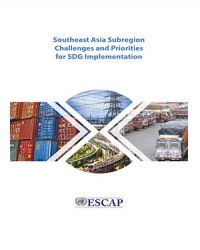
This paper examines the sustainable development challenges and priorities in Southeast Asia subregion at both the country and subregional levels. It covers all 11 countries of the subregion and reviews the subregion as a whole, mainly within the purview of the Association of Southeast Asian Nations (ASEAN).
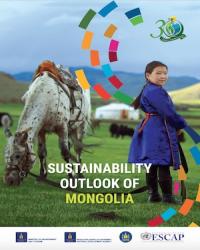
The 2030 Agenda for Sustainable Development, along with its Sustainable Development Goals (SDGs), provide countries with an ambitious development agenda to leave no one behind. As countries grapple with this complex and integrated development agenda, building a reliable evidence base to take stock of where we stand, to measure progress, to help identify priorities and to address the interlinkages and tradeoffs will be a vital element of success.
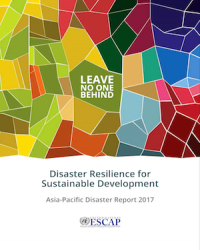
Asia and the Pacific is the region most affected by natural disasters which hit hardest at the poorest countries and communities. And on present trends, as more migrants crowd into slums and shanty towns in Asia-Pacific cities, whole communities are likely to see their homes and livelihoods shattered or washed away by the wilder forces of nature.
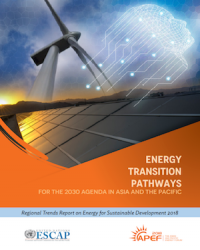
The Asia-Pacific region’s rapid and sustained economic growth, increasing population, and rapid urbanization are driving growth in energy demand. Ensuring that supplies of energy are adequate to meet this growth in ways that are socially, economically and environmentally responsible creates a new set of challenges for policymakers.
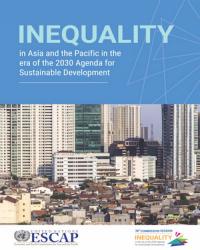
Inequality in Asia and the Pacific is on the rise. Many countries, including those held up as models of dynamism and prosperity, have experienced a widening of existing gaps, accompanied by environmental degradation. Market-led growth alone is not sufficient to deliver a prosperous, sustainable future for all.
The study done by GCAP Afghanistan/Sanayee Development Organisation brings out the facts and analysis about the exclusion and discrimination faced by some of the marginalised groups in Afghanistan like women and girls, old people, children and young people, religious and ethnic minorities etc and explores the opportunities lying ahead in the framework of Agenda 2030 to address their issues so that they are not left behind.
The study done by Wada Na Todo Abhiyan, GCAP, NACDAOR, World Vision, Centre For Equity Studies Welt Hunger Hilfe and supported by European Union brings out the facts and analysis about the exclusion and discrimination faced by some of the marginalised group in India like Dalits, Indigenous communities, Fisherfolk, Muslims, Children and Persons with Disabilities and explores the opportunities lying ahead in the framework of Agenda 2030 to address their issu
The Sustainable Development Goal 6 Synthesis Report 2018 on Water and Sanitation reviews the global progress made towards achieving Sustainable Development Goal 6 (SDG 6) of the 2030 Agenda for Sustainable Development. It builds on the latest data available for the 11 SDG 6 global indicators and will inform the High-level Political Forum for Sustainable Development during its in-depth review of SDG 6 in July 2018. The report represents a joint position from the United Nations family.
Over half of global land-based plastic waste leakage into the ocean originates in just five Asian countries. Yet, the
contribution of informal waste management to reducing pollution, remains largely overlooked. The United
Nations Economic and Social Commission for Asia and the Pacific (ESCAP) is gathering evidence in pilot cities in
Asia to identify opportunities to return plastic resources into the production cycle by linking informal and formal
waste processes.
This paper examines the sustainable development challenges and priorities in Southeast Asia subregion at both the country and subregional levels. It covers all 11 countries of the subregion and reviews the subregion as a whole, mainly within the purview of the Association of Southeast Asian Nations (ASEAN).
The 2030 Agenda for Sustainable Development, along with its Sustainable Development Goals (SDGs), provide countries with an ambitious development agenda to leave no one behind. As countries grapple with this complex and integrated development agenda, building a reliable evidence base to take stock of where we stand, to measure progress, to help identify priorities and to address the interlinkages and tradeoffs will be a vital element of success.
Asia and the Pacific is the region most affected by natural disasters which hit hardest at the poorest countries and communities. And on present trends, as more migrants crowd into slums and shanty towns in Asia-Pacific cities, whole communities are likely to see their homes and livelihoods shattered or washed away by the wilder forces of nature.
The Asia-Pacific region’s rapid and sustained economic growth, increasing population, and rapid urbanization are driving growth in energy demand. Ensuring that supplies of energy are adequate to meet this growth in ways that are socially, economically and environmentally responsible creates a new set of challenges for policymakers.
Inequality in Asia and the Pacific is on the rise. Many countries, including those held up as models of dynamism and prosperity, have experienced a widening of existing gaps, accompanied by environmental degradation. Market-led growth alone is not sufficient to deliver a prosperous, sustainable future for all.
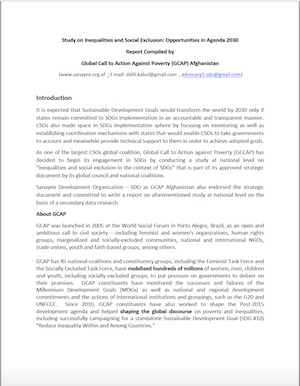
The study done by GCAP Afghanistan/Sanayee Development Organisation brings out the facts and analysis about the exclusion and discrimination faced by some of the marginalised groups in Afghanistan like women and girls, old people, children and young people, religious and ethnic minorities etc and explores the opportunities lying ahead in the framework of Agenda 2030 to address their issues so that they are not left behind.
The study done by Wada Na Todo Abhiyan, GCAP, NACDAOR, World Vision, Centre For Equity Studies Welt Hunger Hilfe and supported by European Union brings out the facts and analysis about the exclusion and discrimination faced by some of the marginalised group in India like Dalits, Indigenous communities, Fisherfolk, Muslims, Children and Persons with Disabilities and explores the opportunities lying ahead in the framework of Agenda 2030 to address their issu
The Sustainable Development Goal 6 Synthesis Report 2018 on Water and Sanitation reviews the global progress made towards achieving Sustainable Development Goal 6 (SDG 6) of the 2030 Agenda for Sustainable Development. It builds on the latest data available for the 11 SDG 6 global indicators and will inform the High-level Political Forum for Sustainable Development during its in-depth review of SDG 6 in July 2018. The report represents a joint position from the United Nations family.
Over half of global land-based plastic waste leakage into the ocean originates in just five Asian countries. Yet, the
contribution of informal waste management to reducing pollution, remains largely overlooked. The United
Nations Economic and Social Commission for Asia and the Pacific (ESCAP) is gathering evidence in pilot cities in
Asia to identify opportunities to return plastic resources into the production cycle by linking informal and formal
waste processes.
This paper examines the sustainable development challenges and priorities in Southeast Asia subregion at both the country and subregional levels. It covers all 11 countries of the subregion and reviews the subregion as a whole, mainly within the purview of the Association of Southeast Asian Nations (ASEAN).
The 2030 Agenda for Sustainable Development, along with its Sustainable Development Goals (SDGs), provide countries with an ambitious development agenda to leave no one behind. As countries grapple with this complex and integrated development agenda, building a reliable evidence base to take stock of where we stand, to measure progress, to help identify priorities and to address the interlinkages and tradeoffs will be a vital element of success.
Asia and the Pacific is the region most affected by natural disasters which hit hardest at the poorest countries and communities. And on present trends, as more migrants crowd into slums and shanty towns in Asia-Pacific cities, whole communities are likely to see their homes and livelihoods shattered or washed away by the wilder forces of nature.
The Asia-Pacific region’s rapid and sustained economic growth, increasing population, and rapid urbanization are driving growth in energy demand. Ensuring that supplies of energy are adequate to meet this growth in ways that are socially, economically and environmentally responsible creates a new set of challenges for policymakers.
Inequality in Asia and the Pacific is on the rise. Many countries, including those held up as models of dynamism and prosperity, have experienced a widening of existing gaps, accompanied by environmental degradation. Market-led growth alone is not sufficient to deliver a prosperous, sustainable future for all.

The study done by Wada Na Todo Abhiyan, GCAP, NACDAOR, World Vision, Centre For Equity Studies Welt Hunger Hilfe and supported by European Union brings out the facts and analysis about the exclusion and discrimination faced by some of the marginalised group in India like Dalits, Indigenous communities, Fisherfolk, Muslims, Children and Persons with Disabilities and explores the opportunities lying ahead in the framework of Agenda 2030 to address their issu
The Sustainable Development Goal 6 Synthesis Report 2018 on Water and Sanitation reviews the global progress made towards achieving Sustainable Development Goal 6 (SDG 6) of the 2030 Agenda for Sustainable Development. It builds on the latest data available for the 11 SDG 6 global indicators and will inform the High-level Political Forum for Sustainable Development during its in-depth review of SDG 6 in July 2018. The report represents a joint position from the United Nations family.
Over half of global land-based plastic waste leakage into the ocean originates in just five Asian countries. Yet, the
contribution of informal waste management to reducing pollution, remains largely overlooked. The United
Nations Economic and Social Commission for Asia and the Pacific (ESCAP) is gathering evidence in pilot cities in
Asia to identify opportunities to return plastic resources into the production cycle by linking informal and formal
waste processes.
This paper examines the sustainable development challenges and priorities in Southeast Asia subregion at both the country and subregional levels. It covers all 11 countries of the subregion and reviews the subregion as a whole, mainly within the purview of the Association of Southeast Asian Nations (ASEAN).
The 2030 Agenda for Sustainable Development, along with its Sustainable Development Goals (SDGs), provide countries with an ambitious development agenda to leave no one behind. As countries grapple with this complex and integrated development agenda, building a reliable evidence base to take stock of where we stand, to measure progress, to help identify priorities and to address the interlinkages and tradeoffs will be a vital element of success.
Asia and the Pacific is the region most affected by natural disasters which hit hardest at the poorest countries and communities. And on present trends, as more migrants crowd into slums and shanty towns in Asia-Pacific cities, whole communities are likely to see their homes and livelihoods shattered or washed away by the wilder forces of nature.
The Asia-Pacific region’s rapid and sustained economic growth, increasing population, and rapid urbanization are driving growth in energy demand. Ensuring that supplies of energy are adequate to meet this growth in ways that are socially, economically and environmentally responsible creates a new set of challenges for policymakers.
Inequality in Asia and the Pacific is on the rise. Many countries, including those held up as models of dynamism and prosperity, have experienced a widening of existing gaps, accompanied by environmental degradation. Market-led growth alone is not sufficient to deliver a prosperous, sustainable future for all.

The Sustainable Development Goal 6 Synthesis Report 2018 on Water and Sanitation reviews the global progress made towards achieving Sustainable Development Goal 6 (SDG 6) of the 2030 Agenda for Sustainable Development. It builds on the latest data available for the 11 SDG 6 global indicators and will inform the High-level Political Forum for Sustainable Development during its in-depth review of SDG 6 in July 2018. The report represents a joint position from the United Nations family.
Over half of global land-based plastic waste leakage into the ocean originates in just five Asian countries. Yet, the
contribution of informal waste management to reducing pollution, remains largely overlooked. The United
Nations Economic and Social Commission for Asia and the Pacific (ESCAP) is gathering evidence in pilot cities in
Asia to identify opportunities to return plastic resources into the production cycle by linking informal and formal
waste processes.
This paper examines the sustainable development challenges and priorities in Southeast Asia subregion at both the country and subregional levels. It covers all 11 countries of the subregion and reviews the subregion as a whole, mainly within the purview of the Association of Southeast Asian Nations (ASEAN).
The 2030 Agenda for Sustainable Development, along with its Sustainable Development Goals (SDGs), provide countries with an ambitious development agenda to leave no one behind. As countries grapple with this complex and integrated development agenda, building a reliable evidence base to take stock of where we stand, to measure progress, to help identify priorities and to address the interlinkages and tradeoffs will be a vital element of success.
Asia and the Pacific is the region most affected by natural disasters which hit hardest at the poorest countries and communities. And on present trends, as more migrants crowd into slums and shanty towns in Asia-Pacific cities, whole communities are likely to see their homes and livelihoods shattered or washed away by the wilder forces of nature.
The Asia-Pacific region’s rapid and sustained economic growth, increasing population, and rapid urbanization are driving growth in energy demand. Ensuring that supplies of energy are adequate to meet this growth in ways that are socially, economically and environmentally responsible creates a new set of challenges for policymakers.
Inequality in Asia and the Pacific is on the rise. Many countries, including those held up as models of dynamism and prosperity, have experienced a widening of existing gaps, accompanied by environmental degradation. Market-led growth alone is not sufficient to deliver a prosperous, sustainable future for all.

Over half of global land-based plastic waste leakage into the ocean originates in just five Asian countries. Yet, the
contribution of informal waste management to reducing pollution, remains largely overlooked. The United
Nations Economic and Social Commission for Asia and the Pacific (ESCAP) is gathering evidence in pilot cities in
Asia to identify opportunities to return plastic resources into the production cycle by linking informal and formal
waste processes.
This paper examines the sustainable development challenges and priorities in Southeast Asia subregion at both the country and subregional levels. It covers all 11 countries of the subregion and reviews the subregion as a whole, mainly within the purview of the Association of Southeast Asian Nations (ASEAN).
The 2030 Agenda for Sustainable Development, along with its Sustainable Development Goals (SDGs), provide countries with an ambitious development agenda to leave no one behind. As countries grapple with this complex and integrated development agenda, building a reliable evidence base to take stock of where we stand, to measure progress, to help identify priorities and to address the interlinkages and tradeoffs will be a vital element of success.
Asia and the Pacific is the region most affected by natural disasters which hit hardest at the poorest countries and communities. And on present trends, as more migrants crowd into slums and shanty towns in Asia-Pacific cities, whole communities are likely to see their homes and livelihoods shattered or washed away by the wilder forces of nature.
The Asia-Pacific region’s rapid and sustained economic growth, increasing population, and rapid urbanization are driving growth in energy demand. Ensuring that supplies of energy are adequate to meet this growth in ways that are socially, economically and environmentally responsible creates a new set of challenges for policymakers.
Inequality in Asia and the Pacific is on the rise. Many countries, including those held up as models of dynamism and prosperity, have experienced a widening of existing gaps, accompanied by environmental degradation. Market-led growth alone is not sufficient to deliver a prosperous, sustainable future for all.

This paper examines the sustainable development challenges and priorities in Southeast Asia subregion at both the country and subregional levels. It covers all 11 countries of the subregion and reviews the subregion as a whole, mainly within the purview of the Association of Southeast Asian Nations (ASEAN).
The 2030 Agenda for Sustainable Development, along with its Sustainable Development Goals (SDGs), provide countries with an ambitious development agenda to leave no one behind. As countries grapple with this complex and integrated development agenda, building a reliable evidence base to take stock of where we stand, to measure progress, to help identify priorities and to address the interlinkages and tradeoffs will be a vital element of success.
Asia and the Pacific is the region most affected by natural disasters which hit hardest at the poorest countries and communities. And on present trends, as more migrants crowd into slums and shanty towns in Asia-Pacific cities, whole communities are likely to see their homes and livelihoods shattered or washed away by the wilder forces of nature.
The Asia-Pacific region’s rapid and sustained economic growth, increasing population, and rapid urbanization are driving growth in energy demand. Ensuring that supplies of energy are adequate to meet this growth in ways that are socially, economically and environmentally responsible creates a new set of challenges for policymakers.
Inequality in Asia and the Pacific is on the rise. Many countries, including those held up as models of dynamism and prosperity, have experienced a widening of existing gaps, accompanied by environmental degradation. Market-led growth alone is not sufficient to deliver a prosperous, sustainable future for all.

The 2030 Agenda for Sustainable Development, along with its Sustainable Development Goals (SDGs), provide countries with an ambitious development agenda to leave no one behind. As countries grapple with this complex and integrated development agenda, building a reliable evidence base to take stock of where we stand, to measure progress, to help identify priorities and to address the interlinkages and tradeoffs will be a vital element of success.
Asia and the Pacific is the region most affected by natural disasters which hit hardest at the poorest countries and communities. And on present trends, as more migrants crowd into slums and shanty towns in Asia-Pacific cities, whole communities are likely to see their homes and livelihoods shattered or washed away by the wilder forces of nature.
The Asia-Pacific region’s rapid and sustained economic growth, increasing population, and rapid urbanization are driving growth in energy demand. Ensuring that supplies of energy are adequate to meet this growth in ways that are socially, economically and environmentally responsible creates a new set of challenges for policymakers.
Inequality in Asia and the Pacific is on the rise. Many countries, including those held up as models of dynamism and prosperity, have experienced a widening of existing gaps, accompanied by environmental degradation. Market-led growth alone is not sufficient to deliver a prosperous, sustainable future for all.

Asia and the Pacific is the region most affected by natural disasters which hit hardest at the poorest countries and communities. And on present trends, as more migrants crowd into slums and shanty towns in Asia-Pacific cities, whole communities are likely to see their homes and livelihoods shattered or washed away by the wilder forces of nature.
The Asia-Pacific region’s rapid and sustained economic growth, increasing population, and rapid urbanization are driving growth in energy demand. Ensuring that supplies of energy are adequate to meet this growth in ways that are socially, economically and environmentally responsible creates a new set of challenges for policymakers.
Inequality in Asia and the Pacific is on the rise. Many countries, including those held up as models of dynamism and prosperity, have experienced a widening of existing gaps, accompanied by environmental degradation. Market-led growth alone is not sufficient to deliver a prosperous, sustainable future for all.
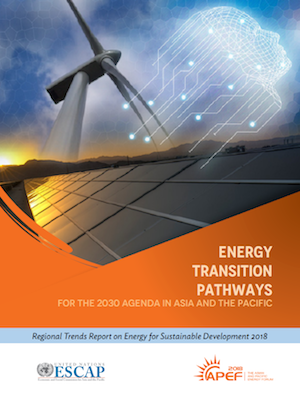
The Asia-Pacific region’s rapid and sustained economic growth, increasing population, and rapid urbanization are driving growth in energy demand. Ensuring that supplies of energy are adequate to meet this growth in ways that are socially, economically and environmentally responsible creates a new set of challenges for policymakers.
Inequality in Asia and the Pacific is on the rise. Many countries, including those held up as models of dynamism and prosperity, have experienced a widening of existing gaps, accompanied by environmental degradation. Market-led growth alone is not sufficient to deliver a prosperous, sustainable future for all.
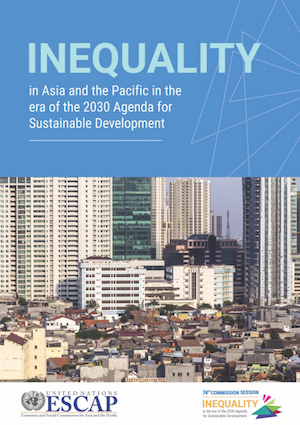
Inequality in Asia and the Pacific is on the rise. Many countries, including those held up as models of dynamism and prosperity, have experienced a widening of existing gaps, accompanied by environmental degradation. Market-led growth alone is not sufficient to deliver a prosperous, sustainable future for all.