
This guide is designed as a practical tool for agencies and staff within the UN system as they plan out their advocacy work on the 2030 Agenda. A key focus of the guide is on how to conduct UN advocacy in a strategic way – an approach that rises above a list of activities and annual deliverables to an overall vision of where each country effort begins, where it aims to go and a plausible path of action to get there. It draws on a wide constellation of conversations with UN staff.
E-Library
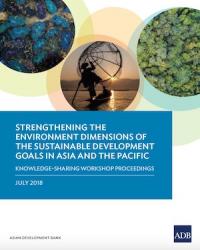
ADB, in collaboration with the United Nations Economic and Social Commission for Asia and the Pacific (UNESCAP) and UN Environment, held a Knowledge Sharing Workshop on Strengthening the Environment Dimensions of the SDGs in Asia and the Pacific on 21–22 February 2018, in Bangkok, Thailand.
This Compendium provides a review of available tools related to the integration of environment into policy and planning in order to deliver sustainable development in the Asia and Pacific region. In the context of this task, the term ‘tools’ is interpreted broadly in order to ensure that as wide a range of potential tools and processes as possible is considered that could be used to integrate the environmental considerations of sustainable development into the Policy Cycle.
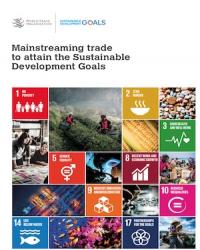
The WTO is central to achieving the 2030 Agenda for Sustainable Development and its Sustainable Development Goals (SDGs), which set targets to be achieved by 2030 in areas such as poverty reduction, health, education and the environment. This publication looks at the role played by the WTO in delivering the SDGs and identifies a number of steps that would help to ensure that international trade contributes to accelerating progress in achieving these goals.
The 2030 Agenda is a universal, collective responsibility that covers all levels: global, national and territorial. To address global policy challenges in a complex and interconnected world, policy coherence will be key. A more coherent multilateral system will be essential to reconcile and deliver the economic, social and environmental transformations needed to achieve the Sustainable Development Goals (SDGs).
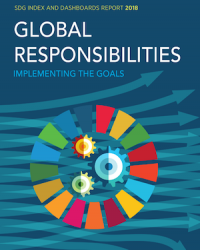
The 2018 SDG Index and Dashboards report presents a revised and updated assessment of countries’ distance to achieving the Sustainable Development Goals (SDGs). It includes detailed SDG Dashboards to help identify implementation priorities for the SDGs. The report also provides a ranking of countries by the aggregate SDG Index of overall performance.
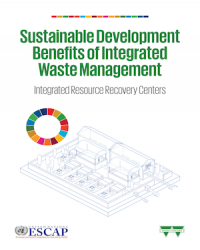
This publication shares the key lessons from a decade of IRRC implementation to improve municipal solid waste management, and explains how the contributions of IRRCs can support the implementation of important global and regional agendas for sustainable development: the 2030 Agenda for Sustainable Development; the New Urban Agenda; the Paris Agreement under the United Nations Framework Convention on Climate Change; the Regional Road Map for the 2030 Agenda in the Asia-Pacific region; and the
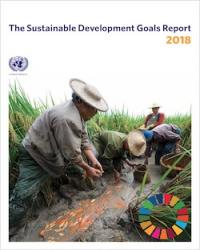
The Sustainable Development Goals Report 2018 reviews progress in the third year of implementation of the 2030 Agenda for Sustainable Development. This overview presents highlights of progress and remaining gaps for all 17 Sustainable Development Goals (SDGs), based on the latest available data, and examines some of the interconnections across Goals and targets.
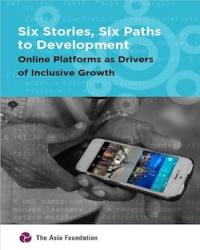
To the hundreds of millions of people in Asia with access to the web, online platforms have emerged as valuable tools for navigating this connected world. In sectors as diverse as finance, logistics, cross-border trade, talent acquisition, household services, and the traditional buying and selling of goods, online platforms are reshaping the way people interact and businesses operate. By 2020, over a billion people in the Asia-Pacific alone will be served by platforms.
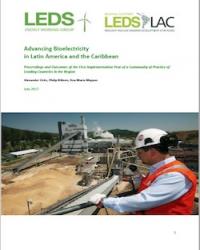
The Bioelectricity Community of Practice, run by LEDS LAC and the Energy Working Group of LEDS GP, brings together LAC government leaders in charge of designing and implementing bioelectricity policies and programs. It gives them the opportunity to share tools for gathering and processing bioelectricity data to support decision-making.
ADB, in collaboration with the United Nations Economic and Social Commission for Asia and the Pacific (UNESCAP) and UN Environment, held a Knowledge Sharing Workshop on Strengthening the Environment Dimensions of the SDGs in Asia and the Pacific on 21–22 February 2018, in Bangkok, Thailand.
This Compendium provides a review of available tools related to the integration of environment into policy and planning in order to deliver sustainable development in the Asia and Pacific region. In the context of this task, the term ‘tools’ is interpreted broadly in order to ensure that as wide a range of potential tools and processes as possible is considered that could be used to integrate the environmental considerations of sustainable development into the Policy Cycle.
The WTO is central to achieving the 2030 Agenda for Sustainable Development and its Sustainable Development Goals (SDGs), which set targets to be achieved by 2030 in areas such as poverty reduction, health, education and the environment. This publication looks at the role played by the WTO in delivering the SDGs and identifies a number of steps that would help to ensure that international trade contributes to accelerating progress in achieving these goals.
The 2030 Agenda is a universal, collective responsibility that covers all levels: global, national and territorial. To address global policy challenges in a complex and interconnected world, policy coherence will be key. A more coherent multilateral system will be essential to reconcile and deliver the economic, social and environmental transformations needed to achieve the Sustainable Development Goals (SDGs).
The 2018 SDG Index and Dashboards report presents a revised and updated assessment of countries’ distance to achieving the Sustainable Development Goals (SDGs). It includes detailed SDG Dashboards to help identify implementation priorities for the SDGs. The report also provides a ranking of countries by the aggregate SDG Index of overall performance.
This publication shares the key lessons from a decade of IRRC implementation to improve municipal solid waste management, and explains how the contributions of IRRCs can support the implementation of important global and regional agendas for sustainable development: the 2030 Agenda for Sustainable Development; the New Urban Agenda; the Paris Agreement under the United Nations Framework Convention on Climate Change; the Regional Road Map for the 2030 Agenda in the Asia-Pacific region; and the
The Sustainable Development Goals Report 2018 reviews progress in the third year of implementation of the 2030 Agenda for Sustainable Development. This overview presents highlights of progress and remaining gaps for all 17 Sustainable Development Goals (SDGs), based on the latest available data, and examines some of the interconnections across Goals and targets.
To the hundreds of millions of people in Asia with access to the web, online platforms have emerged as valuable tools for navigating this connected world. In sectors as diverse as finance, logistics, cross-border trade, talent acquisition, household services, and the traditional buying and selling of goods, online platforms are reshaping the way people interact and businesses operate. By 2020, over a billion people in the Asia-Pacific alone will be served by platforms.
The Bioelectricity Community of Practice, run by LEDS LAC and the Energy Working Group of LEDS GP, brings together LAC government leaders in charge of designing and implementing bioelectricity policies and programs. It gives them the opportunity to share tools for gathering and processing bioelectricity data to support decision-making.

ADB, in collaboration with the United Nations Economic and Social Commission for Asia and the Pacific (UNESCAP) and UN Environment, held a Knowledge Sharing Workshop on Strengthening the Environment Dimensions of the SDGs in Asia and the Pacific on 21–22 February 2018, in Bangkok, Thailand.
This Compendium provides a review of available tools related to the integration of environment into policy and planning in order to deliver sustainable development in the Asia and Pacific region. In the context of this task, the term ‘tools’ is interpreted broadly in order to ensure that as wide a range of potential tools and processes as possible is considered that could be used to integrate the environmental considerations of sustainable development into the Policy Cycle.
The WTO is central to achieving the 2030 Agenda for Sustainable Development and its Sustainable Development Goals (SDGs), which set targets to be achieved by 2030 in areas such as poverty reduction, health, education and the environment. This publication looks at the role played by the WTO in delivering the SDGs and identifies a number of steps that would help to ensure that international trade contributes to accelerating progress in achieving these goals.
The 2030 Agenda is a universal, collective responsibility that covers all levels: global, national and territorial. To address global policy challenges in a complex and interconnected world, policy coherence will be key. A more coherent multilateral system will be essential to reconcile and deliver the economic, social and environmental transformations needed to achieve the Sustainable Development Goals (SDGs).
The 2018 SDG Index and Dashboards report presents a revised and updated assessment of countries’ distance to achieving the Sustainable Development Goals (SDGs). It includes detailed SDG Dashboards to help identify implementation priorities for the SDGs. The report also provides a ranking of countries by the aggregate SDG Index of overall performance.
This publication shares the key lessons from a decade of IRRC implementation to improve municipal solid waste management, and explains how the contributions of IRRCs can support the implementation of important global and regional agendas for sustainable development: the 2030 Agenda for Sustainable Development; the New Urban Agenda; the Paris Agreement under the United Nations Framework Convention on Climate Change; the Regional Road Map for the 2030 Agenda in the Asia-Pacific region; and the
The Sustainable Development Goals Report 2018 reviews progress in the third year of implementation of the 2030 Agenda for Sustainable Development. This overview presents highlights of progress and remaining gaps for all 17 Sustainable Development Goals (SDGs), based on the latest available data, and examines some of the interconnections across Goals and targets.
To the hundreds of millions of people in Asia with access to the web, online platforms have emerged as valuable tools for navigating this connected world. In sectors as diverse as finance, logistics, cross-border trade, talent acquisition, household services, and the traditional buying and selling of goods, online platforms are reshaping the way people interact and businesses operate. By 2020, over a billion people in the Asia-Pacific alone will be served by platforms.
The Bioelectricity Community of Practice, run by LEDS LAC and the Energy Working Group of LEDS GP, brings together LAC government leaders in charge of designing and implementing bioelectricity policies and programs. It gives them the opportunity to share tools for gathering and processing bioelectricity data to support decision-making.
This Compendium provides a review of available tools related to the integration of environment into policy and planning in order to deliver sustainable development in the Asia and Pacific region. In the context of this task, the term ‘tools’ is interpreted broadly in order to ensure that as wide a range of potential tools and processes as possible is considered that could be used to integrate the environmental considerations of sustainable development into the Policy Cycle.
The WTO is central to achieving the 2030 Agenda for Sustainable Development and its Sustainable Development Goals (SDGs), which set targets to be achieved by 2030 in areas such as poverty reduction, health, education and the environment. This publication looks at the role played by the WTO in delivering the SDGs and identifies a number of steps that would help to ensure that international trade contributes to accelerating progress in achieving these goals.
The 2030 Agenda is a universal, collective responsibility that covers all levels: global, national and territorial. To address global policy challenges in a complex and interconnected world, policy coherence will be key. A more coherent multilateral system will be essential to reconcile and deliver the economic, social and environmental transformations needed to achieve the Sustainable Development Goals (SDGs).
The 2018 SDG Index and Dashboards report presents a revised and updated assessment of countries’ distance to achieving the Sustainable Development Goals (SDGs). It includes detailed SDG Dashboards to help identify implementation priorities for the SDGs. The report also provides a ranking of countries by the aggregate SDG Index of overall performance.
This publication shares the key lessons from a decade of IRRC implementation to improve municipal solid waste management, and explains how the contributions of IRRCs can support the implementation of important global and regional agendas for sustainable development: the 2030 Agenda for Sustainable Development; the New Urban Agenda; the Paris Agreement under the United Nations Framework Convention on Climate Change; the Regional Road Map for the 2030 Agenda in the Asia-Pacific region; and the
The Sustainable Development Goals Report 2018 reviews progress in the third year of implementation of the 2030 Agenda for Sustainable Development. This overview presents highlights of progress and remaining gaps for all 17 Sustainable Development Goals (SDGs), based on the latest available data, and examines some of the interconnections across Goals and targets.
To the hundreds of millions of people in Asia with access to the web, online platforms have emerged as valuable tools for navigating this connected world. In sectors as diverse as finance, logistics, cross-border trade, talent acquisition, household services, and the traditional buying and selling of goods, online platforms are reshaping the way people interact and businesses operate. By 2020, over a billion people in the Asia-Pacific alone will be served by platforms.
The Bioelectricity Community of Practice, run by LEDS LAC and the Energy Working Group of LEDS GP, brings together LAC government leaders in charge of designing and implementing bioelectricity policies and programs. It gives them the opportunity to share tools for gathering and processing bioelectricity data to support decision-making.

The WTO is central to achieving the 2030 Agenda for Sustainable Development and its Sustainable Development Goals (SDGs), which set targets to be achieved by 2030 in areas such as poverty reduction, health, education and the environment. This publication looks at the role played by the WTO in delivering the SDGs and identifies a number of steps that would help to ensure that international trade contributes to accelerating progress in achieving these goals.
The 2030 Agenda is a universal, collective responsibility that covers all levels: global, national and territorial. To address global policy challenges in a complex and interconnected world, policy coherence will be key. A more coherent multilateral system will be essential to reconcile and deliver the economic, social and environmental transformations needed to achieve the Sustainable Development Goals (SDGs).
The 2018 SDG Index and Dashboards report presents a revised and updated assessment of countries’ distance to achieving the Sustainable Development Goals (SDGs). It includes detailed SDG Dashboards to help identify implementation priorities for the SDGs. The report also provides a ranking of countries by the aggregate SDG Index of overall performance.
This publication shares the key lessons from a decade of IRRC implementation to improve municipal solid waste management, and explains how the contributions of IRRCs can support the implementation of important global and regional agendas for sustainable development: the 2030 Agenda for Sustainable Development; the New Urban Agenda; the Paris Agreement under the United Nations Framework Convention on Climate Change; the Regional Road Map for the 2030 Agenda in the Asia-Pacific region; and the
The Sustainable Development Goals Report 2018 reviews progress in the third year of implementation of the 2030 Agenda for Sustainable Development. This overview presents highlights of progress and remaining gaps for all 17 Sustainable Development Goals (SDGs), based on the latest available data, and examines some of the interconnections across Goals and targets.
To the hundreds of millions of people in Asia with access to the web, online platforms have emerged as valuable tools for navigating this connected world. In sectors as diverse as finance, logistics, cross-border trade, talent acquisition, household services, and the traditional buying and selling of goods, online platforms are reshaping the way people interact and businesses operate. By 2020, over a billion people in the Asia-Pacific alone will be served by platforms.
The Bioelectricity Community of Practice, run by LEDS LAC and the Energy Working Group of LEDS GP, brings together LAC government leaders in charge of designing and implementing bioelectricity policies and programs. It gives them the opportunity to share tools for gathering and processing bioelectricity data to support decision-making.

The 2030 Agenda is a universal, collective responsibility that covers all levels: global, national and territorial. To address global policy challenges in a complex and interconnected world, policy coherence will be key. A more coherent multilateral system will be essential to reconcile and deliver the economic, social and environmental transformations needed to achieve the Sustainable Development Goals (SDGs).
The 2018 SDG Index and Dashboards report presents a revised and updated assessment of countries’ distance to achieving the Sustainable Development Goals (SDGs). It includes detailed SDG Dashboards to help identify implementation priorities for the SDGs. The report also provides a ranking of countries by the aggregate SDG Index of overall performance.
This publication shares the key lessons from a decade of IRRC implementation to improve municipal solid waste management, and explains how the contributions of IRRCs can support the implementation of important global and regional agendas for sustainable development: the 2030 Agenda for Sustainable Development; the New Urban Agenda; the Paris Agreement under the United Nations Framework Convention on Climate Change; the Regional Road Map for the 2030 Agenda in the Asia-Pacific region; and the
The Sustainable Development Goals Report 2018 reviews progress in the third year of implementation of the 2030 Agenda for Sustainable Development. This overview presents highlights of progress and remaining gaps for all 17 Sustainable Development Goals (SDGs), based on the latest available data, and examines some of the interconnections across Goals and targets.
To the hundreds of millions of people in Asia with access to the web, online platforms have emerged as valuable tools for navigating this connected world. In sectors as diverse as finance, logistics, cross-border trade, talent acquisition, household services, and the traditional buying and selling of goods, online platforms are reshaping the way people interact and businesses operate. By 2020, over a billion people in the Asia-Pacific alone will be served by platforms.
The Bioelectricity Community of Practice, run by LEDS LAC and the Energy Working Group of LEDS GP, brings together LAC government leaders in charge of designing and implementing bioelectricity policies and programs. It gives them the opportunity to share tools for gathering and processing bioelectricity data to support decision-making.
The 2018 SDG Index and Dashboards report presents a revised and updated assessment of countries’ distance to achieving the Sustainable Development Goals (SDGs). It includes detailed SDG Dashboards to help identify implementation priorities for the SDGs. The report also provides a ranking of countries by the aggregate SDG Index of overall performance.
This publication shares the key lessons from a decade of IRRC implementation to improve municipal solid waste management, and explains how the contributions of IRRCs can support the implementation of important global and regional agendas for sustainable development: the 2030 Agenda for Sustainable Development; the New Urban Agenda; the Paris Agreement under the United Nations Framework Convention on Climate Change; the Regional Road Map for the 2030 Agenda in the Asia-Pacific region; and the
The Sustainable Development Goals Report 2018 reviews progress in the third year of implementation of the 2030 Agenda for Sustainable Development. This overview presents highlights of progress and remaining gaps for all 17 Sustainable Development Goals (SDGs), based on the latest available data, and examines some of the interconnections across Goals and targets.
To the hundreds of millions of people in Asia with access to the web, online platforms have emerged as valuable tools for navigating this connected world. In sectors as diverse as finance, logistics, cross-border trade, talent acquisition, household services, and the traditional buying and selling of goods, online platforms are reshaping the way people interact and businesses operate. By 2020, over a billion people in the Asia-Pacific alone will be served by platforms.
The Bioelectricity Community of Practice, run by LEDS LAC and the Energy Working Group of LEDS GP, brings together LAC government leaders in charge of designing and implementing bioelectricity policies and programs. It gives them the opportunity to share tools for gathering and processing bioelectricity data to support decision-making.
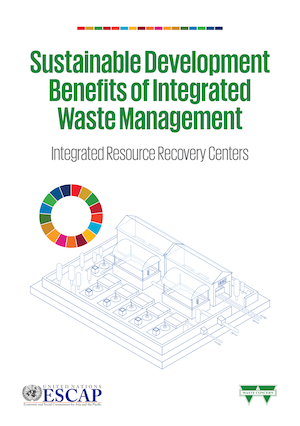
This publication shares the key lessons from a decade of IRRC implementation to improve municipal solid waste management, and explains how the contributions of IRRCs can support the implementation of important global and regional agendas for sustainable development: the 2030 Agenda for Sustainable Development; the New Urban Agenda; the Paris Agreement under the United Nations Framework Convention on Climate Change; the Regional Road Map for the 2030 Agenda in the Asia-Pacific region; and the
The Sustainable Development Goals Report 2018 reviews progress in the third year of implementation of the 2030 Agenda for Sustainable Development. This overview presents highlights of progress and remaining gaps for all 17 Sustainable Development Goals (SDGs), based on the latest available data, and examines some of the interconnections across Goals and targets.
To the hundreds of millions of people in Asia with access to the web, online platforms have emerged as valuable tools for navigating this connected world. In sectors as diverse as finance, logistics, cross-border trade, talent acquisition, household services, and the traditional buying and selling of goods, online platforms are reshaping the way people interact and businesses operate. By 2020, over a billion people in the Asia-Pacific alone will be served by platforms.
The Bioelectricity Community of Practice, run by LEDS LAC and the Energy Working Group of LEDS GP, brings together LAC government leaders in charge of designing and implementing bioelectricity policies and programs. It gives them the opportunity to share tools for gathering and processing bioelectricity data to support decision-making.

The Sustainable Development Goals Report 2018 reviews progress in the third year of implementation of the 2030 Agenda for Sustainable Development. This overview presents highlights of progress and remaining gaps for all 17 Sustainable Development Goals (SDGs), based on the latest available data, and examines some of the interconnections across Goals and targets.
To the hundreds of millions of people in Asia with access to the web, online platforms have emerged as valuable tools for navigating this connected world. In sectors as diverse as finance, logistics, cross-border trade, talent acquisition, household services, and the traditional buying and selling of goods, online platforms are reshaping the way people interact and businesses operate. By 2020, over a billion people in the Asia-Pacific alone will be served by platforms.
The Bioelectricity Community of Practice, run by LEDS LAC and the Energy Working Group of LEDS GP, brings together LAC government leaders in charge of designing and implementing bioelectricity policies and programs. It gives them the opportunity to share tools for gathering and processing bioelectricity data to support decision-making.
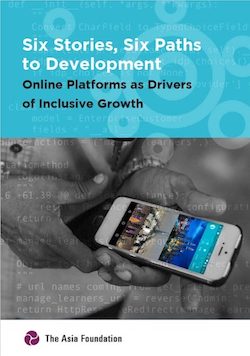
To the hundreds of millions of people in Asia with access to the web, online platforms have emerged as valuable tools for navigating this connected world. In sectors as diverse as finance, logistics, cross-border trade, talent acquisition, household services, and the traditional buying and selling of goods, online platforms are reshaping the way people interact and businesses operate. By 2020, over a billion people in the Asia-Pacific alone will be served by platforms.
The Bioelectricity Community of Practice, run by LEDS LAC and the Energy Working Group of LEDS GP, brings together LAC government leaders in charge of designing and implementing bioelectricity policies and programs. It gives them the opportunity to share tools for gathering and processing bioelectricity data to support decision-making.
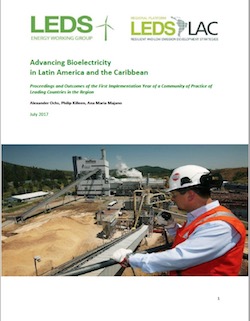
The Bioelectricity Community of Practice, run by LEDS LAC and the Energy Working Group of LEDS GP, brings together LAC government leaders in charge of designing and implementing bioelectricity policies and programs. It gives them the opportunity to share tools for gathering and processing bioelectricity data to support decision-making.