
The second iteration of the Energy Toolkit, a collection of leading instruments and methodologies for climate-compatible energy planning, offers energy practitioners, policymakers, and experts a quick reference guide to some of the best-established instruments available at no or low cost. The result is a compilation of 25 tools from agencies around the world.
E-Library
This report assesses progress in the implementation of the Sustainable Development Goals (SDGs) and targets in Asia and the Pacific.
This publication explores the connection between human rights and data in the context of the 2030 Agenda for Sustainable Development. It provides a human rights perspective on data, focusing on:
The report collects and analyses recent information, tools and guidance to operationalise a human rights-based approach (HRBA) to the implementation of the 2030 Agenda for Sustainable Development. It is a guide book for professionals who work with the intertwined fields of sustainable development and human rights, and includes:
ASEAN countries have committed themselves to the implementation of two parallel but interrelated processes: the ASEAN Community Vision 2025 (ASEAN Vision 2025) and the United Nations 2030 Agenda for Sustainable Development (2030 Agenda). From the outset ASEAN Member States underlined the complementarity of these two agendas in their efforts to uplift the standards of living of the region’s peoples.
At the global level in 2015 countries set in motion the most far reaching and ambitious development agenda of our time, the 2030 Agenda for Sustainable Development. In Asia and the Pacific, countries have already begun translating this ambitious agenda into action and many have already set up the national architecture for coordinating and promoting the implementation of the Sustainable Development Goals (SDGs).
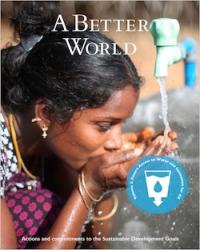
With the establishment of the Sustainable Development Goals (SDGs) in 2015, Tudor Rose and its Human Development Forum has accepted the challenge to expand its human development publishing with the creation of a series of volumes, each dedicated to one or more of the 17 SDGs. Entitled A Better World,
Further to its aim of making the sustainable development agenda accessible and comprehensible to a wide range of audiences, the UNSSC Knowledge Centre for Sustainable Development has launched a Primer on Sustainable Development.
The 2017 report discusses wastewater and explains how it can be harnessed and recreated as a resource.
The 2016 report focusses on employment related to water, and the necessity of effective and sustainable management of the resource to ensure these jobs persist. The report discusses the main sources of employment that require water to be agriculture, forestry, fisheries, energy, resource-intensive manufacturing, recycling, building and transport. These sectors combined employee half of the global workforce, and thus adequate water management is critical.
This report assesses progress in the implementation of the Sustainable Development Goals (SDGs) and targets in Asia and the Pacific.
This publication explores the connection between human rights and data in the context of the 2030 Agenda for Sustainable Development. It provides a human rights perspective on data, focusing on:
The report collects and analyses recent information, tools and guidance to operationalise a human rights-based approach (HRBA) to the implementation of the 2030 Agenda for Sustainable Development. It is a guide book for professionals who work with the intertwined fields of sustainable development and human rights, and includes:
ASEAN countries have committed themselves to the implementation of two parallel but interrelated processes: the ASEAN Community Vision 2025 (ASEAN Vision 2025) and the United Nations 2030 Agenda for Sustainable Development (2030 Agenda). From the outset ASEAN Member States underlined the complementarity of these two agendas in their efforts to uplift the standards of living of the region’s peoples.
At the global level in 2015 countries set in motion the most far reaching and ambitious development agenda of our time, the 2030 Agenda for Sustainable Development. In Asia and the Pacific, countries have already begun translating this ambitious agenda into action and many have already set up the national architecture for coordinating and promoting the implementation of the Sustainable Development Goals (SDGs).
With the establishment of the Sustainable Development Goals (SDGs) in 2015, Tudor Rose and its Human Development Forum has accepted the challenge to expand its human development publishing with the creation of a series of volumes, each dedicated to one or more of the 17 SDGs. Entitled A Better World,
Further to its aim of making the sustainable development agenda accessible and comprehensible to a wide range of audiences, the UNSSC Knowledge Centre for Sustainable Development has launched a Primer on Sustainable Development.
The 2017 report discusses wastewater and explains how it can be harnessed and recreated as a resource.
The 2016 report focusses on employment related to water, and the necessity of effective and sustainable management of the resource to ensure these jobs persist. The report discusses the main sources of employment that require water to be agriculture, forestry, fisheries, energy, resource-intensive manufacturing, recycling, building and transport. These sectors combined employee half of the global workforce, and thus adequate water management is critical.
This report assesses progress in the implementation of the Sustainable Development Goals (SDGs) and targets in Asia and the Pacific.
This publication explores the connection between human rights and data in the context of the 2030 Agenda for Sustainable Development. It provides a human rights perspective on data, focusing on:
The report collects and analyses recent information, tools and guidance to operationalise a human rights-based approach (HRBA) to the implementation of the 2030 Agenda for Sustainable Development. It is a guide book for professionals who work with the intertwined fields of sustainable development and human rights, and includes:
ASEAN countries have committed themselves to the implementation of two parallel but interrelated processes: the ASEAN Community Vision 2025 (ASEAN Vision 2025) and the United Nations 2030 Agenda for Sustainable Development (2030 Agenda). From the outset ASEAN Member States underlined the complementarity of these two agendas in their efforts to uplift the standards of living of the region’s peoples.
At the global level in 2015 countries set in motion the most far reaching and ambitious development agenda of our time, the 2030 Agenda for Sustainable Development. In Asia and the Pacific, countries have already begun translating this ambitious agenda into action and many have already set up the national architecture for coordinating and promoting the implementation of the Sustainable Development Goals (SDGs).
With the establishment of the Sustainable Development Goals (SDGs) in 2015, Tudor Rose and its Human Development Forum has accepted the challenge to expand its human development publishing with the creation of a series of volumes, each dedicated to one or more of the 17 SDGs. Entitled A Better World,
Further to its aim of making the sustainable development agenda accessible and comprehensible to a wide range of audiences, the UNSSC Knowledge Centre for Sustainable Development has launched a Primer on Sustainable Development.
The 2017 report discusses wastewater and explains how it can be harnessed and recreated as a resource.
The 2016 report focusses on employment related to water, and the necessity of effective and sustainable management of the resource to ensure these jobs persist. The report discusses the main sources of employment that require water to be agriculture, forestry, fisheries, energy, resource-intensive manufacturing, recycling, building and transport. These sectors combined employee half of the global workforce, and thus adequate water management is critical.

This publication explores the connection between human rights and data in the context of the 2030 Agenda for Sustainable Development. It provides a human rights perspective on data, focusing on:
The report collects and analyses recent information, tools and guidance to operationalise a human rights-based approach (HRBA) to the implementation of the 2030 Agenda for Sustainable Development. It is a guide book for professionals who work with the intertwined fields of sustainable development and human rights, and includes:
ASEAN countries have committed themselves to the implementation of two parallel but interrelated processes: the ASEAN Community Vision 2025 (ASEAN Vision 2025) and the United Nations 2030 Agenda for Sustainable Development (2030 Agenda). From the outset ASEAN Member States underlined the complementarity of these two agendas in their efforts to uplift the standards of living of the region’s peoples.
At the global level in 2015 countries set in motion the most far reaching and ambitious development agenda of our time, the 2030 Agenda for Sustainable Development. In Asia and the Pacific, countries have already begun translating this ambitious agenda into action and many have already set up the national architecture for coordinating and promoting the implementation of the Sustainable Development Goals (SDGs).
With the establishment of the Sustainable Development Goals (SDGs) in 2015, Tudor Rose and its Human Development Forum has accepted the challenge to expand its human development publishing with the creation of a series of volumes, each dedicated to one or more of the 17 SDGs. Entitled A Better World,
Further to its aim of making the sustainable development agenda accessible and comprehensible to a wide range of audiences, the UNSSC Knowledge Centre for Sustainable Development has launched a Primer on Sustainable Development.
The 2017 report discusses wastewater and explains how it can be harnessed and recreated as a resource.
The 2016 report focusses on employment related to water, and the necessity of effective and sustainable management of the resource to ensure these jobs persist. The report discusses the main sources of employment that require water to be agriculture, forestry, fisheries, energy, resource-intensive manufacturing, recycling, building and transport. These sectors combined employee half of the global workforce, and thus adequate water management is critical.
The report collects and analyses recent information, tools and guidance to operationalise a human rights-based approach (HRBA) to the implementation of the 2030 Agenda for Sustainable Development. It is a guide book for professionals who work with the intertwined fields of sustainable development and human rights, and includes:
ASEAN countries have committed themselves to the implementation of two parallel but interrelated processes: the ASEAN Community Vision 2025 (ASEAN Vision 2025) and the United Nations 2030 Agenda for Sustainable Development (2030 Agenda). From the outset ASEAN Member States underlined the complementarity of these two agendas in their efforts to uplift the standards of living of the region’s peoples.
At the global level in 2015 countries set in motion the most far reaching and ambitious development agenda of our time, the 2030 Agenda for Sustainable Development. In Asia and the Pacific, countries have already begun translating this ambitious agenda into action and many have already set up the national architecture for coordinating and promoting the implementation of the Sustainable Development Goals (SDGs).
With the establishment of the Sustainable Development Goals (SDGs) in 2015, Tudor Rose and its Human Development Forum has accepted the challenge to expand its human development publishing with the creation of a series of volumes, each dedicated to one or more of the 17 SDGs. Entitled A Better World,
Further to its aim of making the sustainable development agenda accessible and comprehensible to a wide range of audiences, the UNSSC Knowledge Centre for Sustainable Development has launched a Primer on Sustainable Development.
The 2017 report discusses wastewater and explains how it can be harnessed and recreated as a resource.
The 2016 report focusses on employment related to water, and the necessity of effective and sustainable management of the resource to ensure these jobs persist. The report discusses the main sources of employment that require water to be agriculture, forestry, fisheries, energy, resource-intensive manufacturing, recycling, building and transport. These sectors combined employee half of the global workforce, and thus adequate water management is critical.

ASEAN countries have committed themselves to the implementation of two parallel but interrelated processes: the ASEAN Community Vision 2025 (ASEAN Vision 2025) and the United Nations 2030 Agenda for Sustainable Development (2030 Agenda). From the outset ASEAN Member States underlined the complementarity of these two agendas in their efforts to uplift the standards of living of the region’s peoples.
At the global level in 2015 countries set in motion the most far reaching and ambitious development agenda of our time, the 2030 Agenda for Sustainable Development. In Asia and the Pacific, countries have already begun translating this ambitious agenda into action and many have already set up the national architecture for coordinating and promoting the implementation of the Sustainable Development Goals (SDGs).
With the establishment of the Sustainable Development Goals (SDGs) in 2015, Tudor Rose and its Human Development Forum has accepted the challenge to expand its human development publishing with the creation of a series of volumes, each dedicated to one or more of the 17 SDGs. Entitled A Better World,
Further to its aim of making the sustainable development agenda accessible and comprehensible to a wide range of audiences, the UNSSC Knowledge Centre for Sustainable Development has launched a Primer on Sustainable Development.
The 2017 report discusses wastewater and explains how it can be harnessed and recreated as a resource.
The 2016 report focusses on employment related to water, and the necessity of effective and sustainable management of the resource to ensure these jobs persist. The report discusses the main sources of employment that require water to be agriculture, forestry, fisheries, energy, resource-intensive manufacturing, recycling, building and transport. These sectors combined employee half of the global workforce, and thus adequate water management is critical.

At the global level in 2015 countries set in motion the most far reaching and ambitious development agenda of our time, the 2030 Agenda for Sustainable Development. In Asia and the Pacific, countries have already begun translating this ambitious agenda into action and many have already set up the national architecture for coordinating and promoting the implementation of the Sustainable Development Goals (SDGs).
With the establishment of the Sustainable Development Goals (SDGs) in 2015, Tudor Rose and its Human Development Forum has accepted the challenge to expand its human development publishing with the creation of a series of volumes, each dedicated to one or more of the 17 SDGs. Entitled A Better World,
Further to its aim of making the sustainable development agenda accessible and comprehensible to a wide range of audiences, the UNSSC Knowledge Centre for Sustainable Development has launched a Primer on Sustainable Development.
The 2017 report discusses wastewater and explains how it can be harnessed and recreated as a resource.
The 2016 report focusses on employment related to water, and the necessity of effective and sustainable management of the resource to ensure these jobs persist. The report discusses the main sources of employment that require water to be agriculture, forestry, fisheries, energy, resource-intensive manufacturing, recycling, building and transport. These sectors combined employee half of the global workforce, and thus adequate water management is critical.
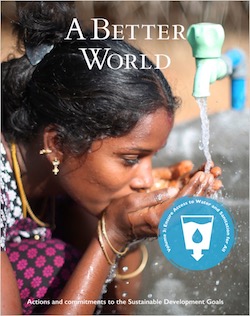
With the establishment of the Sustainable Development Goals (SDGs) in 2015, Tudor Rose and its Human Development Forum has accepted the challenge to expand its human development publishing with the creation of a series of volumes, each dedicated to one or more of the 17 SDGs. Entitled A Better World,
Further to its aim of making the sustainable development agenda accessible and comprehensible to a wide range of audiences, the UNSSC Knowledge Centre for Sustainable Development has launched a Primer on Sustainable Development.
The 2017 report discusses wastewater and explains how it can be harnessed and recreated as a resource.
The 2016 report focusses on employment related to water, and the necessity of effective and sustainable management of the resource to ensure these jobs persist. The report discusses the main sources of employment that require water to be agriculture, forestry, fisheries, energy, resource-intensive manufacturing, recycling, building and transport. These sectors combined employee half of the global workforce, and thus adequate water management is critical.
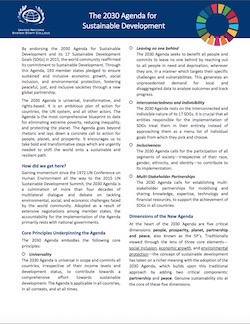
Further to its aim of making the sustainable development agenda accessible and comprehensible to a wide range of audiences, the UNSSC Knowledge Centre for Sustainable Development has launched a Primer on Sustainable Development.
The 2017 report discusses wastewater and explains how it can be harnessed and recreated as a resource.
The 2016 report focusses on employment related to water, and the necessity of effective and sustainable management of the resource to ensure these jobs persist. The report discusses the main sources of employment that require water to be agriculture, forestry, fisheries, energy, resource-intensive manufacturing, recycling, building and transport. These sectors combined employee half of the global workforce, and thus adequate water management is critical.
The 2017 report discusses wastewater and explains how it can be harnessed and recreated as a resource.
The 2016 report focusses on employment related to water, and the necessity of effective and sustainable management of the resource to ensure these jobs persist. The report discusses the main sources of employment that require water to be agriculture, forestry, fisheries, energy, resource-intensive manufacturing, recycling, building and transport. These sectors combined employee half of the global workforce, and thus adequate water management is critical.
The 2016 report focusses on employment related to water, and the necessity of effective and sustainable management of the resource to ensure these jobs persist. The report discusses the main sources of employment that require water to be agriculture, forestry, fisheries, energy, resource-intensive manufacturing, recycling, building and transport. These sectors combined employee half of the global workforce, and thus adequate water management is critical.