E-Learning
Facing the global nutrition challenges, the World Health Organization (WHO) teamed up with the United Nations Institute for Training and Research (UNITAR) to design, under the guidance of the Department of Nutrition for Health and Development (NHD), a Nutrition Knowledge Hub.
- Browse
The One UN Climate Change Learning Partnership (UN CC:Learn) is a joint initiative of more than 30 multilateral organizations helping countries to achieve climate change action both through general climate literacy and applied skills development.
- Browse Now
ReliefWeb is the leading humanitarian information source on global crises and disasters. It is a specialized digital service of the UN Office for the Coordination of Humanitarian Affairs (OCHA).
- Browse now
The course provides guidance on the rationale and the main characteristics of Indicator 6.4.1, and on how to compute the two dimensions constituting the indicator: the hydrologic and the economic component.
- Enroll now
About this Course
The course is designed for people that want to learn about the latest development agenda the international community agreed to achieve by 2030.
- Enroll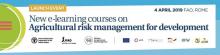
The objective of the courses is to bridge the knowledge gap in production, marketing, financial, institutional and policy-related risks at the farm level, as well as across the agricultural value chain, with a holistic approach in the developing country context.

The Gender Equality in the 2030 Agenda for Sustainable Development training course aims to develop and strengthen awareness of gender equality and women’s empowerment issues within the context of the 2030 Agenda for Sustainable Development.
- Register here
Amongst the most notable skill deficiencies was proficiency in project and programme cycle management (PPCM). PPCM provides an overall analytical and decision-making framework for results-based management.
- https://www.itcilo.org/courses/introduction-project-cycle-management
It cuts across all economic sectors and constitutes 15–30 per cent of the gross domestic product in most countries, hence its significance for enhancing market competitiveness and sustainable development.
- Browse courses