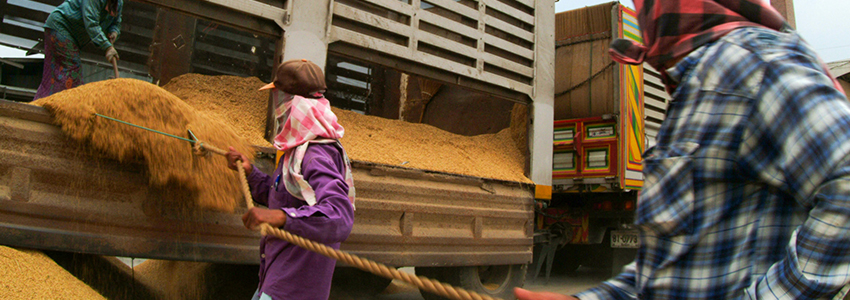
Food loss is a complex issue, often with multiple and interrelated causes operating at different levels. This e-learning course introduces the FAO Case study methodology for the analysis of critical food loss points. This method focuses on revealing and analyzing the multidimensional causes of losses in selected food supply chains, identification of critical loss points, and recommendation of feasible food loss reduction solutions and strategies.
Audience
The target audience for this course includes:
- Field level programme officers who wish or need to design, organize, coordinate and implement a food loss analysis.
- Technical advisors and academics who want to learn more about the topic in order to teach others.
The course aims to provide practical guidance, and quickly develop an understanding of the topic.
Content
This course consists of 12 lessons, ranging from approximately 20 to 50 minutes duration, grouped into three units:
Unit 1 - Introduction to food loss analysis and the case study methodology
This unit develops an understanding of the concepts and purpose of food loss analysis, as well as the dynamic nature of food loss.
Lesson 1.1 Introduction
Lesson 1.2 - What is food loss analysis?
Lesson 1.3 - Food Loss Analysis (FLA) concepts and frameworks
Lesson 1.4 - FLA case study methodology
Unit 2 - Steps 1 - 5 of the case study methodology
Focusing on cereals and legumes, the five lessons in this unit focus upon the first five steps of the case study methodology in detail.
Lesson 2.1 - Preparing to implement the FAO Food Loss Analysis Case Study Methodology
Lesson 2.2 - Screening
Lesson 2.3 - Survey
Lesson 2.4 - Load tracking
Lesson 2.5 - Synthesis and solution finding
Unit 3 - A detailed look at step 6 - reporting and communicating FLA results
This unit concludes the course by considering in detail the final step of the case study methodology: interpretation and utilization of results, and communicating these with different audiences.
Lesson 3.1 - Interpreting and utilizing Food Loss Analysis results
Lesson 3.2 - Communicating conclusions and recommendations
Lesson 3.3 - Three types of reporting