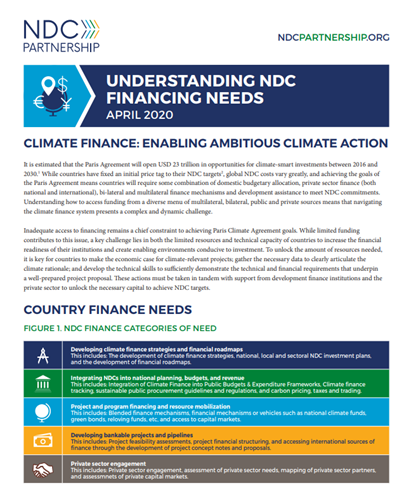
It is estimated that the Paris Agreement will open USD 23 trillion in opportunities for climate-smart investments between 2016 and 2030. While countries have fixed an initial price tag to their NDC targets, global NDC costs vary greatly, and achieving the goals of the Paris Agreement means countries will require some combination of domestic budgetary allocation, private sector finance (both national and international), bi-lateral and multilateral finance mechanisms and development assistance to meet NDC commitments. Understanding how to access funding from a diverse menu of multilateral, bilateral, public and private sources means that navigating the climate finance system presents a complex and dynamic challenge. Inadequate access to financing remains a chief constraint to achieving Paris Climate Agreement goals. While limited funding contributes to this issue, a key challenge lies in both the limited resources and technical capacity of countries to increase the financial readiness of their institutions and create enabling environments conducive to investment. To unlock the amount of resources needed, it is key for countries to make the economic case for climate-relevant projects; gather the necessary data to clearly articulate the climate rationale; and develop the technical skills to sufficiently demonstrate the technical and financial requirements that underpin a well-prepared project proposal. These actions must be taken in tandem with support from development finance institutions and the private sector to unlock the necessary capital to achieve NDC targets.