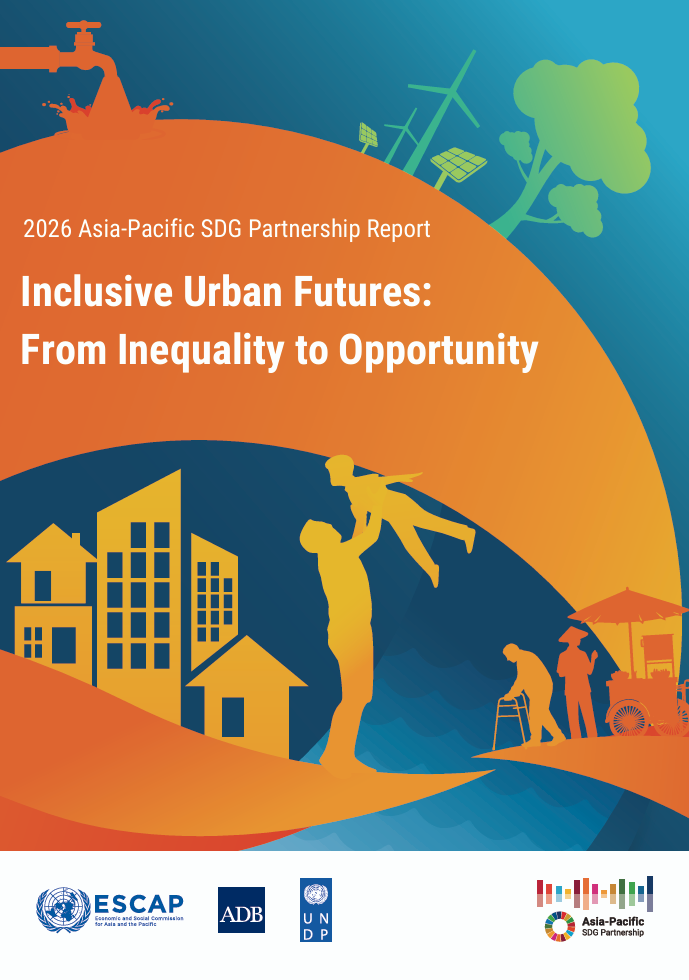
The Asia-Pacific region has urbanized rapidly over the past century and is now home to more than half of the global urban population—over 2.2 billion people. Although population growth is slowing, an estimated 1.2 billion people, or roughly 48 million annually, are expected to move to the region’s urban areas by 2050. Urbanization has spurred economic growth, expanded infrastructure, and created opportunities. However, it has also laid bare inequalities that prevent hundreds of millions of people from fully benefiting from urban development.
Urban inequality has economic, spatial, and social dimensions. They are evident in three interconnected areas: urban residents’ access to affordable housing and basic services, decent and inclusive employment, and environmental liveability. These inequalities shape how people, especially those from low-income groups, access basic services and housing, secure livelihoods and earn their living, and navigate environmental liveability challenges. Such disparities persist because, among other factors, services and exposure risks are unevenly distributed. They disproportionately affect groups already at risk of marginalization, such as women, youth, older persons, migrants, persons with disabilities, and low-income informal workers. Crucially, these imbalances reinforce exclusion and frame the conditions in which people live and work in cities and towns throughout the region.
Centred on Sustainable Development Goal (SDG) 11, which sets out the ambition to make cities and communities inclusive, safe, resilient and sustainable by 2030, the 2026 Asia-Pacific SDG Partnership Report examines how persistent urban inequalities can be narrowed to pave the way for more inclusive urban futures. Aligned with the focus of the 2026 High-Level Political Forum on Sustainable Development (HLPF), this report analyzes the interlinkages of SDG 11 with key SDGs such as clean water and sanitation (SDG 6), affordable and clean energy (SDG 7), industry, innovation and infrastructure (SDG 9), and partnerships for the goals (SDG 17). Furthermore, it outlines three priority areas for action: housing and basic urban services, urban employment, and access to a safe, healthy, and liveable urban environment.
Read More and Download